Author, poet, and storyteller with a critical heart passionate about humanity and spirituality, with an imaginative mind exploring fiction and mythology.
This is my creative lens
Taylor released The Life of a Showgirl in October 2025 and since then, I’ve been listening to the tracks on shuffle for months. Like many Taylor Swift albums that age like wine, certain tracks have started revealing themselves differently with time, offering new and deeper insights.
When I first heard the album, my favourites were The Fate of Ophelia, Eldest Daughter, Actually Romantic (I love petty Taylor), Wood (Naughty Taylor enters the stage!), Cancelled! (a callback to the reputation era), and The Life of a Showgirl (Sabrina’s feature is a beautiful addition).
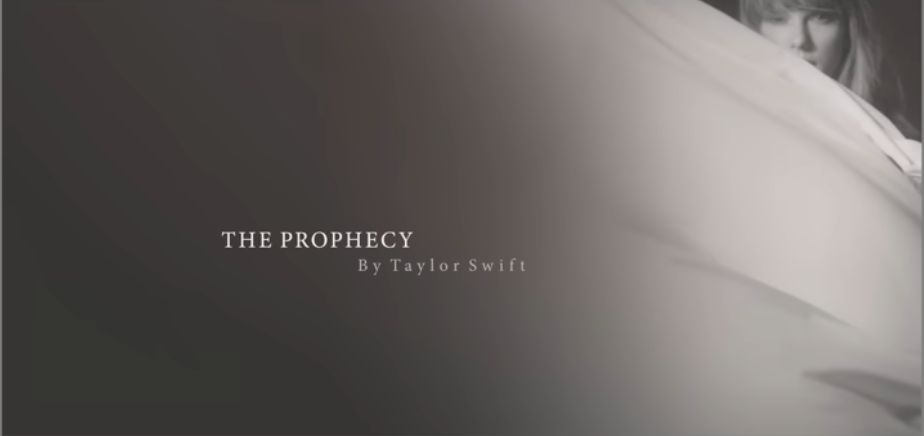
Wi$h Li$t now occupies a top position due to a connection that clicked one evening while scrolling through TikTok, when I stumbled across The Prophecy from The Tortured Poets Department. I realized that Wi$h Li$t serves as the antithesis of The Prophecy.
In an album steeped in fatalism, heartbreak, and emotional turmoil, The Prophecy becomes one of its clearest expressions of desperation. It feels less like a single moment and more like part of a cycle—one among many emotional tragedies that recur throughout the album.
She opens with:
“Hand on the throttle, thought I caught lightning in a bottle, oh, but it’s gone again”
She realizes, in a way that feels familiar across her writing, that this is another moment where she believed she had found something real, only for it to slip away once more. It feels like history repeating itself.
She then shifts into mythic language, using Biblical imagery to suggest a written prophecy and a curse placed on her.
“And it was written, I got cursed like Eve got bitten, oh, was it punishment?”
Here, love is no longer just personal rather it becomes something almost ordained. She frames loneliness as something cosmically assigned rather than circumstantial, as if there is already a script being followed.
This builds into her plea to unknown forces:
“Please I’ve been on my knees, Change the prophecy, don’t want money, just someone who wants my company.”
There is something stripped down here. For someone who is a global popstar and among the wealthiest people in the world, the desire collapses into something extremely simple. Not money. Not status. Not fame—just presence. Just someone who wants her company.
Wi$h Li$t serves as the antithesis of The Prophecy.
Here, she is no longer bargaining with fate. Instead, she is singing about what is essentially her wish list. She is imagining ordinary domesticity with incredible and sweet sincerity: a couple of kids, a driveway to their home, and a basketball hoop. It’s not loud or aggressive, neither is it cosmic nor mythic. It is undisputedly mundane.
She still tackles the subject of wealth but with a different angle. She starts by stating what others might wish for: escapism, pets, glamorous and expensive things, like a yacht under chopper blades or an Oscar on the bathroom floor. That’s all fine. She acknowledges that people deserve what they want and should have it. But hers is pretty simple – she wants her beau and that domesticated life.
Secondly, and most importantly, she has finally received something that has constantly slipped out of her grasp:
“I made wishes on all of the stars, Please, God, bring me a best friend who I think is hot”
“I thought I had it right, once, twice (I did not), But I did not, you caught me off my guard”
This becomes a direct contrast to The Prophecy where she initially thought she had — “caught lightning in a bottle”—only to realize it was gone again. In Wi$h Li$t, she is still in that same posture of wishing and praying, still reaching toward something larger than herself. But this time, she is not narrating loss—she is narrating surprise.
There is a stark difference in the ending. The Prophecy ends with the plea unanswered, the repetition still ongoing—she is still on her knees. In Wi$h Li$t, her fate has essentially changed.
It feels almost as if the same forces she once pleaded with in The Tortured Poets Department have now answered her—and undone The Prophecy. Now she finally has “someone who enjoys her company.”
That understanding deeply changed the meaning of the song for me. It is not just a cute love song. This is a journey she has been on. After having her heart broken so many times, her wish list becomes something disarmingly simple. And the fact that she not only found someone she feels vulnerable enough to write about, but also envisions that simplicity as a reality, is a beautiful thing.