Author, poet, and storyteller with a critical heart passionate about humanity and spirituality, with an imaginative mind exploring fiction and mythology.
This is my creative lens
This is an adage that has guided industries, artists, and audiences for decades. In the music industry, evolution is not the exception but the rule; reinvention is often the only way forward. The greatest artists are those who gamble on evolution, risking comfort for legacy.
Yet, few moves in the music industry are riskier than shifting genres. It is a high-wire act where the stakes are brutally simple: elevate your career to unprecedented heights—or plummet into irrelevance.
For artists with multiple albums already under their belt, the danger multiplies. Reinvention means confronting three hazards head-on:
Alienating a loyal fanbase. Many listeners are rigidly protective of “their” version of an artist. A shift can feel like betrayal.
Sounding inauthentic. Reinvention is fatal if it comes across as bandwagon-chasing rather than a genuine artistic impulse.
Failure of execution. Even the most ambitious pivot can collapse if the new sound lacks cohesion, vision, or hooks.
For most artists, the safer move is to “stay in their lane,” preserving brand identity and avoiding the pitfalls of reinvention, but Taylor Swift is not most artists. Taylor Swift wasn’t just a charting star—she was the face of modern country, Nashville’s small-town storyteller whose acoustic twang and diaristic lyrics defined an era. Abandoning that persona for global pop was a monumental risk. To do this, she turned to the one man who could engineer a bulletproof transition: the architect of pop perfection himself, Max Martin.
THE BRILLIANCE OF "THE ‘MAX’IMARLIST EFFECT"
Behind nearly every bulletproof pop anthem—the kind with hooks so infectious they seem hardwired into your brain—there’s one man: Max Martin. Together with his frequent collaborator Shellback, he embodies what I call The ‘Max’imarlist Effect.
So, what is it?
The ‘Max’imarlist Effect is the transformative impact of Max Martin’s pop mastery: his ability to provide bulletproof sonic scaffolding that catapults artists into an entirely new sphere of global success.
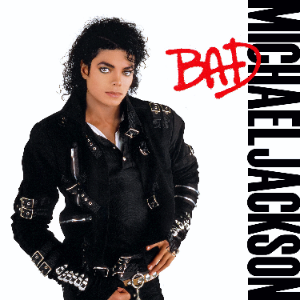
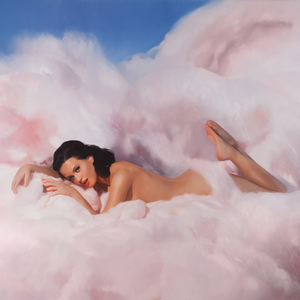
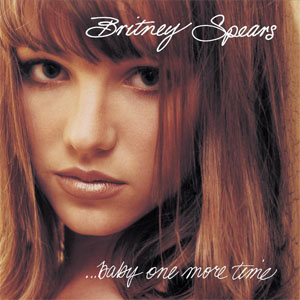
This isn’t theory—it’s history. Martin’s track record spans generations, reshaping the sound of pop at every turn. In the late ’90s, he engineered the golden age of boy bands (Backstreet Boys’ I Want It That Way, NSYNC’s It’s Gonna Be Me). He launched Britney Spears into superstardom with …Baby One More Time and Oops!… I Did It Again. Fast-forward a decade, and he masterminded Katy Perry’s Teenage Dream—a cultural juggernaut that produced five Billboard Hot 100 #1 singles, tying Michael Jackson’s record. Other artists who have benefited from his touch include Ariana Grande, The Weeknd, P!nk, and more.
To solve the puzzle of her own pop transition, Taylor Swift turned to the man who had already written the rulebook for modern pop dominance. With dozens of Billboard #1s to his name, Max Martin wasn’t just a producer—he was a guarantee of sleek, radio-ready, culturally inescapable hits.
And so, it made perfect sense: if Taylor was going to break free from the confines of country and truly establish herself as a global pop icon, she needed the ‘Max’imarlist touch.
This became the arc:
The testing grounds of Red –her first bulletproof pop hits.
The world-conquering triumph of 1989 – where the ‘Max’imarlist Effect defined an era.
The highly anticipated The Life of a Showgirl – where history suggests the formula will once again deliver explosive results.